Monitoring and Improving Your AI Agents: Coolhand Labs vs LangSmith vs Langfuse
Once a router like GoModel handles model choice, how do you keep your agents getting better? A look at three approaches — Coolhand Labs, LangSmith, and Langfuse — and which one fits your team.

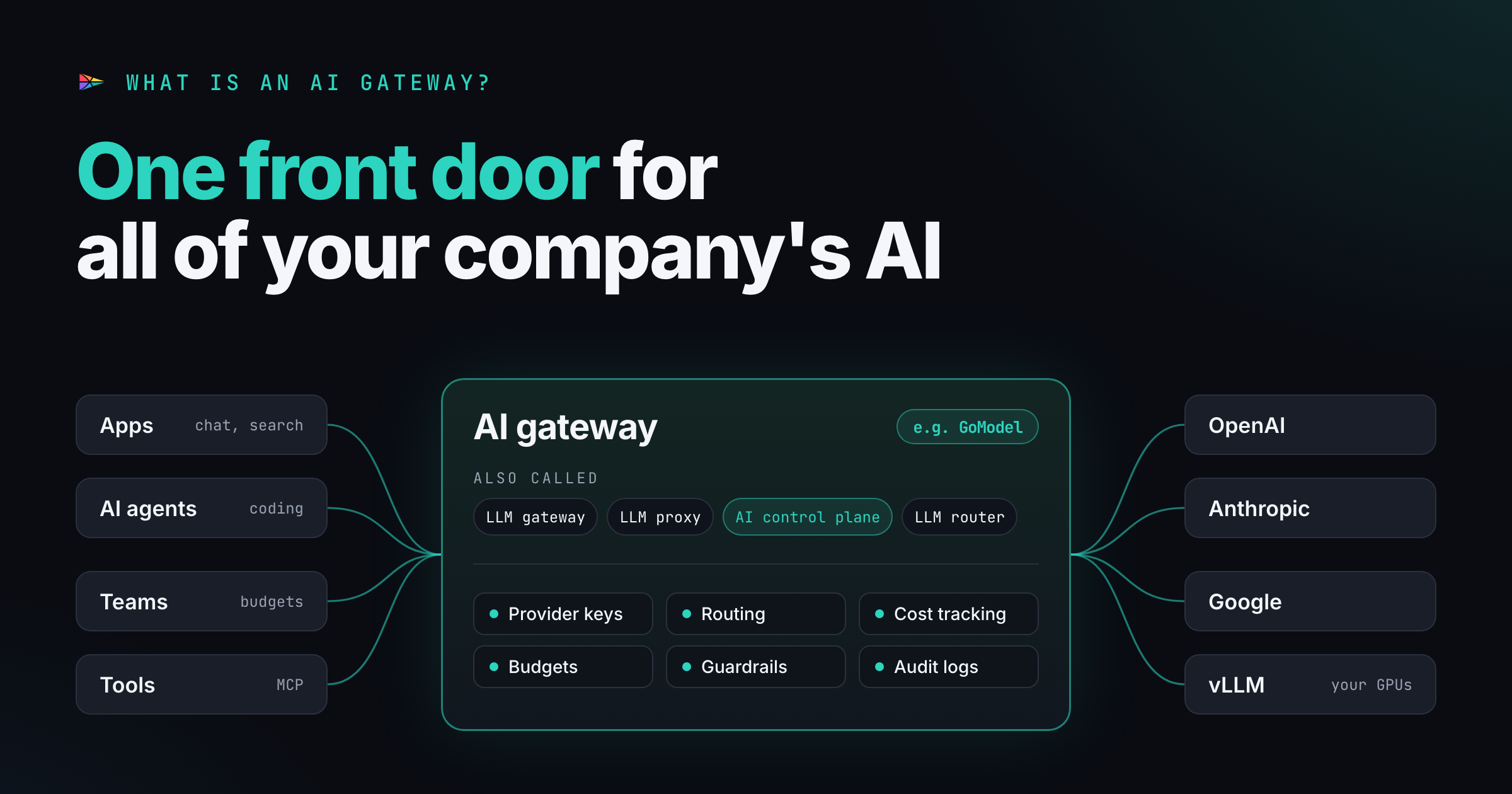
GoModel gives you one API and automatic model routing — every request goes to the right model at the right price, without you rewiring anything. That solves a real problem: you stop babysitting model choice and stop overpaying for frontier models on tasks a cheaper one handles fine.
But routing is only half the loop. Once your agents are live, a different question shows up fast: how do you know they’re working, and how do you make them better? Better prompts. Smarter tool use. Fewer dumb failures the moment a real customer does something you didn’t test for.
That’s a separate category of tooling, and it’s worth understanding before you pick. We looked at three of the most talked-about options — Coolhand Labs, LangSmith, and Langfuse — and the different philosophies behind each.
The short version: LangSmith and Langfuse are observability dashboards; Coolhand is an agentic service. The dashboards help you find the problem; Coolhand uses agents to surface the problem and fix it automatically. Which you want depends a lot on who’s actually going to do the work.
The two philosophies
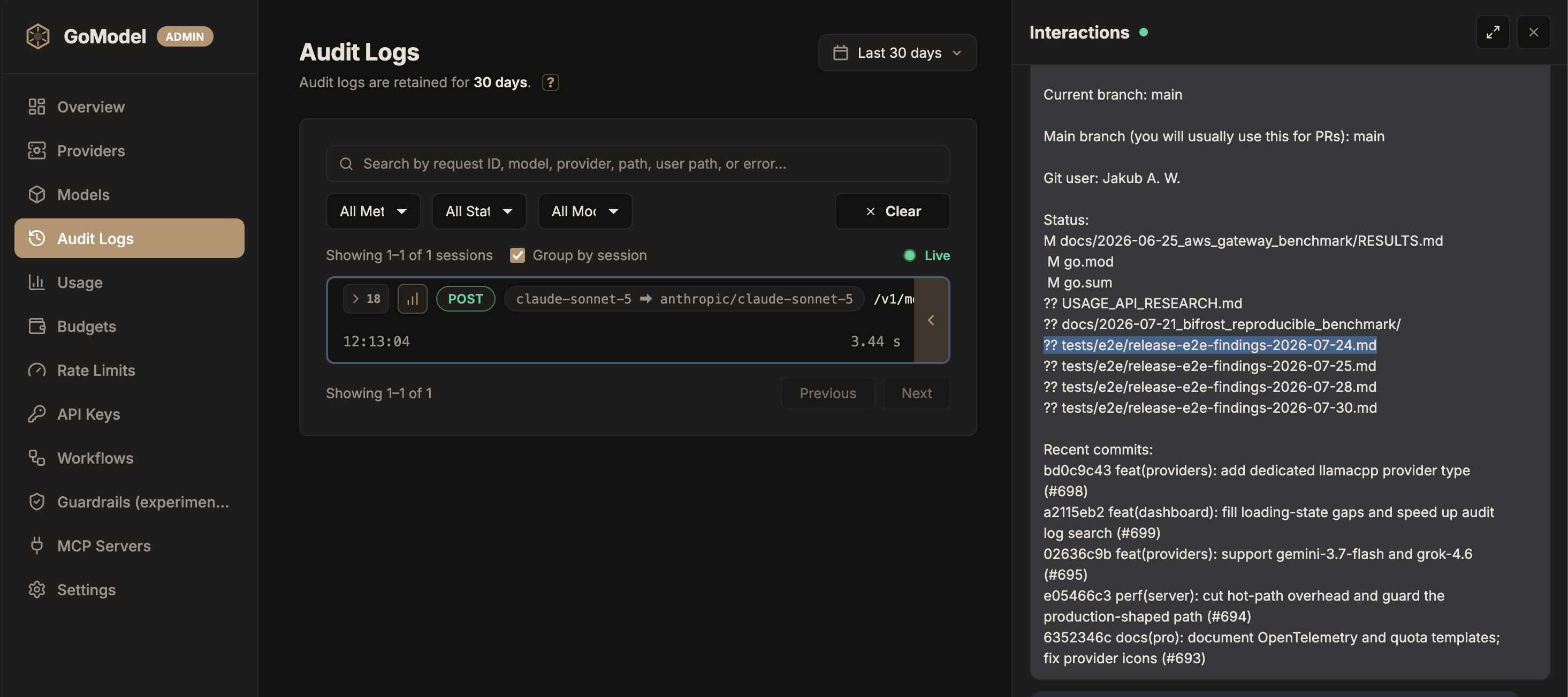
Observability dashboards (LangSmith, Langfuse) instrument your app, capture traces and metrics, and give your engineers a place to inspect what happened — which prompt ran, what the model returned, where latency and cost piled up, which eval failed. They’re powerful. They’re also a tool you hand to someone whose job is to sit in the dashboard, read the signal, and write the fix. The dashboard observes; your team remediates.
An agentic service (Coolhand) flips that. You drop in an SDK, and instead of a dashboard you get the improvement loop run for you — collecting real end-user feedback, finding what’s underperforming, and shipping the fix as a pull request to your codebase, the way an engineer on your team would. You review the PR and merge. Nobody has to live in a dashboard.
If you have a dedicated AI engineer who wants to own observability, a dashboard is a great fit. If you’re a manager with a team that’s already underwater, or a vibe coder who shipped something that works and now needs it to keep working, the service model is built for you.
Side by side
| Feature | Coolhand Labs | LangSmith | Langfuse |
|---|---|---|---|
| Category | Agentic continuous-improvement service | Observability + eval platform | Open-source observability + evals |
| Best for | Managers, overworked teams, vibe coders | Dedicated AI engineers | Dedicated AI engineers |
| Tracing & observability | ✅ Execution-layer, framework-agnostic | ✅ Strong; deepest with LangChain, any framework via OTel | ✅ Strong, open-source, OTel-based |
| Evals / testing | ✅ Driven by real user signal | ✅ Manual + dataset-based | ✅ Manual + dataset-based |
| Native language SDKs | Python, Node.js, Ruby | Python & JS/TS (others via OpenTelemetry) | Python & JS/TS (others via OpenTelemetry) |
| End-user feedback loop | ✅ Core differentiator (CoolhandJS widget) | Limited / manual instrumentation | Partial / manual instrumentation |
| Improves prompts & tools | ✅ Generates the fixes for you | ❌ You read the data, you fix it | ❌ You read the data, you fix it |
| Automatic remediation | ✅ Opens PRs to your repo | ❌ Surfaces issues only | ❌ Surfaces issues only |
| Who does the work | The service | Your engineers | Your engineers |
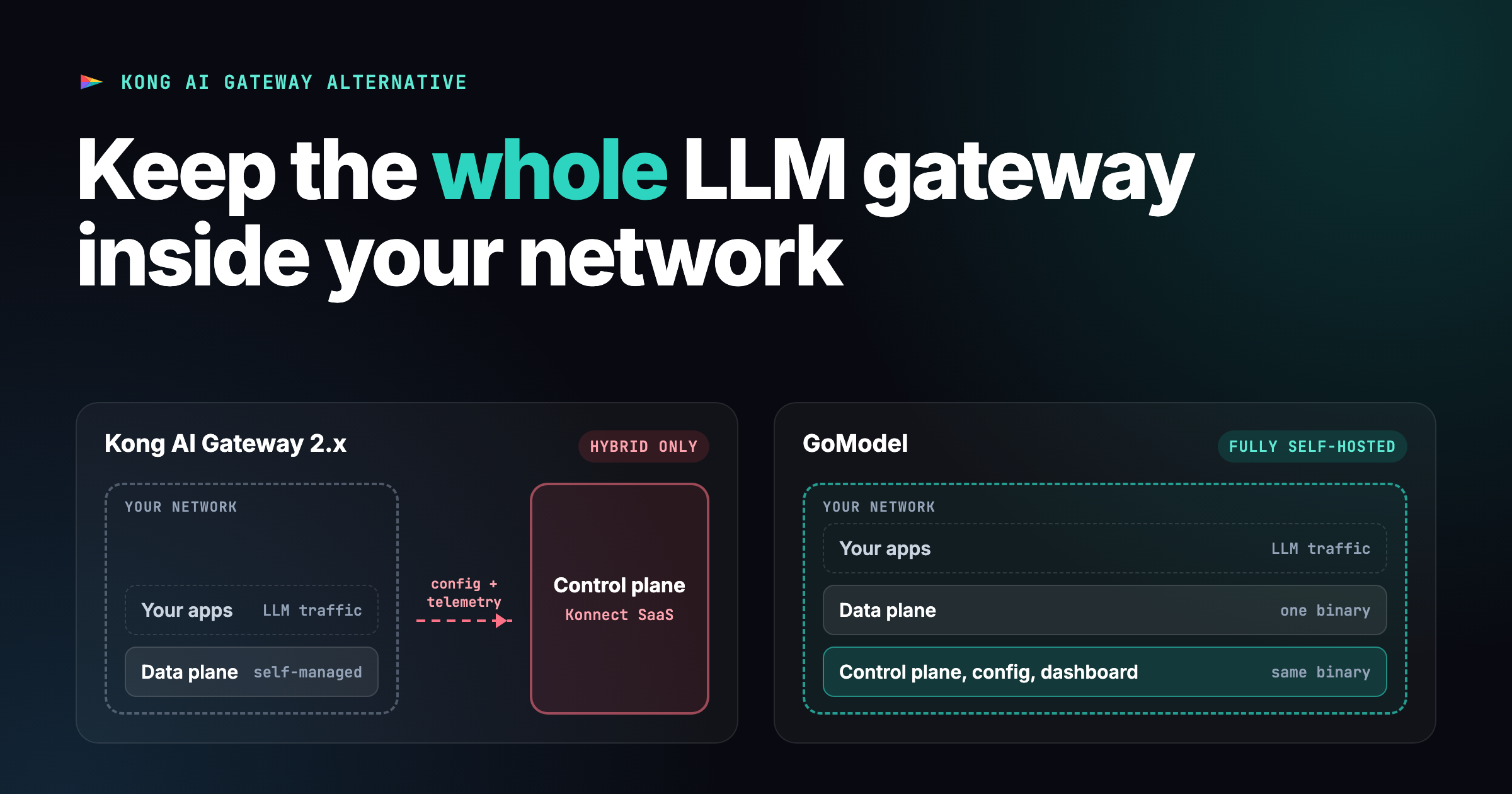
| Open source / self-host | SDKs open; platform SaaS | Proprietary; self-host on enterprise plan | ✅ Fully open-source, self-hostable |
| Works with a router like GoModel | ✅ Model/framework-agnostic | ✅ | ✅ |
| Pricing model | Free & flat-rate tiers for hobby projects and startups; enterprise pays in million-token increments | Per user seat | Flat monthly + data |
| Typical cost outcome | 50–70% reduction reported on existing AI workloads | Not a stated product outcome | Not a stated product outcome |
| Scale / backing | Founder-funded, bootstrapped to profitability | $260M raised, ~$1.25B valuation | Acquired by ClickHouse (Jan 2026); 2,000+ paying customers |
LangSmith
LangSmith is the biggest brand in this space, and for a lot of teams it’s the first name they hear. If your engineers build with LangChain, it’s the natural home for tracing, debugging, and evaluating LLM apps — deep visibility into chains and agents, dataset-based evals, and a mature platform with serious funding behind it ($260M raised, roughly a $1.25B valuation).
Two things to weigh. First, languages and frameworks: LangSmith ships native SDKs for Python and JavaScript/TypeScript only. It is framework-agnostic — it can trace apps built on the OpenAI SDK, Anthropic, LlamaIndex, or custom code — but for anything outside Python/JS you wire it up through OpenTelemetry yourself, and the smoothest automatic instrumentation is reserved for LangChain and LangGraph. If your stack is Python-or-JS on LangChain, it’s a great fit; if it’s Ruby, Go, or something more bespoke, you’ll do more plumbing. Second — and this is the big one for our framing — LangSmith shows you where things go wrong. Turning that into better prompts and better tool-calling is still a job for an engineer sitting in the dashboard. Great if you have that person; a bottleneck if you don’t.
Langfuse
Langfuse is the open-source favorite — the project that outran the original and got acquired by ClickHouse in January 2026, which puts real enterprise muscle and a data-infrastructure parent behind it. It’s broadly adopted (2,000+ paying customers, tens of millions of SDK installs a month) and, crucially, fully self-hostable. If you have strict data-residency requirements, or you just want to own your stack end to end, Langfuse is the strongest option on that axis by a wide margin.
The same language caveat applies: Langfuse maintains native SDKs for Python and JavaScript/TypeScript only. Other languages — Ruby, Go, Java, .NET, PHP, Rust — connect through its OpenTelemetry endpoint or community-maintained SDKs rather than a first-party one, so expect more setup if you’re off the Python/JS path.
The bigger trade-off is the same shape as LangSmith’s: Langfuse is infrastructure your engineers run and read. Self-hosting means someone operates the platform, instruments the app, and then acts on what it surfaces. The observability is excellent; the fixing is still yours to staff.
Coolhand Labs
Coolhand is the odd one out here, on purpose — it isn’t a dashboard. They describe it as “the COO for your agent teams,” and the model is service-first: you drop in their SDK (Ruby, Node, or Python — framework-agnostic, so it sits cleanly on top of a router like GoModel), and Coolhand runs the improvement loop for you. It can even ship fixes directly to your codebase via a GitHub App integration.
The piece the dashboards leave to you, Coolhand owns:
- Real end-user feedback, not synthetic evals. Their CoolhandJS widget captures actual signal from your users, matches it to the specific interaction that caused it, and cleans it — filtering bots and weighting by user expertise — so the improvement signal is real rather than vibes.
- Fixes, shipped as pull requests. When something underperforms, Coolhand generates the improvement — a better prompt, a fixed tool output — and opens a PR to your repo. You review and merge. It’s a part-time AI engineer that works weekends.
- A cost outcome, not just charts. Clients typically report 50–70% reductions in AI spend alongside better output quality — which pairs naturally with what a router is already doing on the cost side.
The honest caveats: Coolhand is early-stage and founder-led, so it doesn’t have the brand, community, or integration breadth of LangSmith, and its platform is SaaS rather than self-hostable like Langfuse. If owning every layer of your stack is a hard requirement, that matters. But if your actual problem is “my agents need to keep getting better and I don’t have an AI engineer to make that happen,” it’s the only one of the three that does the work instead of handing you a place to do it.
So which one?
Our preference is to use Coolhand Labs and Langfuse hand in hand. Coolhand has a generous free tier for startups and works well alongside an open-source, self-hosted tool like Langfuse. Use Coolhand to keep somebody watching the shop while you sleep — collecting real user feedback and shipping fixes as pull requests — and Langfuse for when you want to walk into the shop yourself and dig through the traces by hand. One keeps improving things automatically; the other gives you full, self-hosted visibility the moment you want it.
LangSmith is the third option, and a strong one if your engineers already live in the LangChain ecosystem and want a single mature dashboard to trace, debug, and eval in. But if you’re a startup or a stretched team, the Coolhand-plus-Langfuse combination gives you automated improvement and open-source observability without committing to per-seat pricing.
And all three sit happily downstream of GoModel: the router gets the right model on every call, and your monitoring-and-improvement layer makes sure the agent on top keeps getting smarter. Routing plus improvement is the full loop.
Comparison compiled from public information and vendor materials as of mid-2026. Figures cited: LangSmith — $260M raised, ~$1.25B valuation; Langfuse — acquired by ClickHouse (January 2026), 2,000+ paying customers; Coolhand Labs — 50–70% cost reduction reported. Vendor capabilities change quickly; verify current details before purchase.